Turn your interest in farming into real skills, income, and a future!
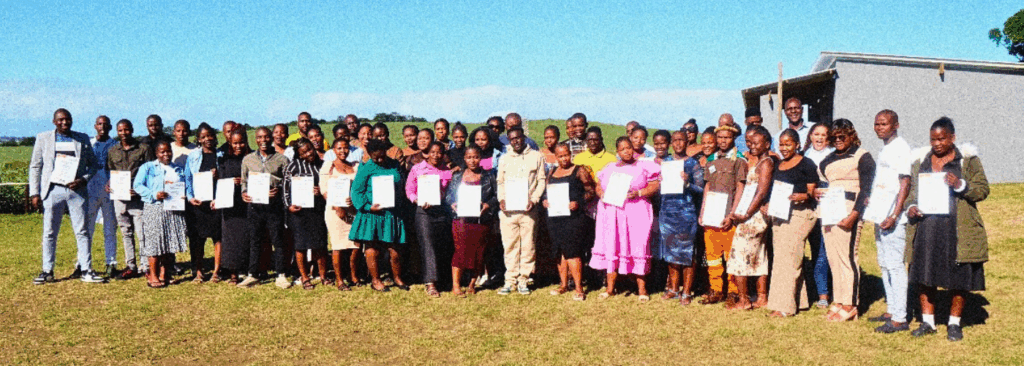
Siyazisiza, with funding support from the FirstRand Empowerment Foundation, is running the Young Farmers Development Programme – now in its second year of a multi-year initiative aimed at equipping rural youth to establish a new agri-enterprise — or grow their existing enterprise. For rural youth ready to farm, earn, and lead – this is your opportunity!
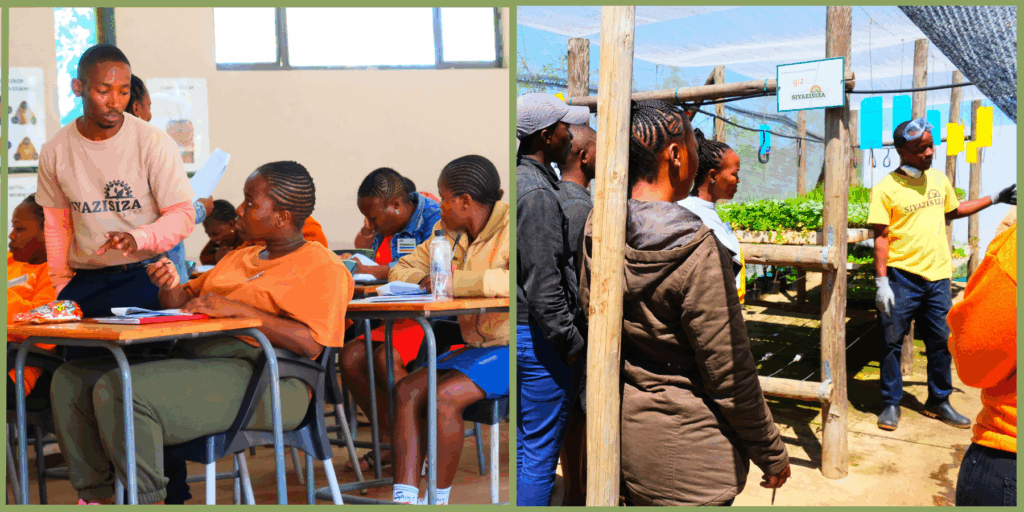
The programme offers hands-on technical and business training, ongoing mentorship, and the opportunity to apply for capital funding to support your enterprise development.
This second year is targeting youth in the following areas:
For this second year, five agri-enterprise specialisation pathways will be focused on:
After completing your technical and enterprise training, you will have the opportunity — if you choose — to develop a business plan for your proposed agri-enterprise. You’ll then pitch this plan to Siyazisiza with the aim of securing investment capital to kick-start your venture. These enterprises can take various forms, from micro start-ups to more established small or medium-sized businesses.
A key strength of the programme is the provision of field-based mentoring following the training workshops. This practical, on-site support helps you apply what you’ve learned to real-life operations, with a focus on day-to-day enterprise management. The goal of this sustained mentorship is to support the long-term viability and self-sufficiency of your enterprise.

Young people who are passionate about one of these five specialisations are encouraged to apply! We are particularly interested in youth who have already started running such agri-enterprises as this is an opportunity to improve and scale up their businesses.
Siyazisiza follows an agroecology approach to agri-enterprise development as we recognise that a healthy and diverse environment is essential for sustainable food production and the well-being of rural communities. This approach informs our training, mentorship and even our catering menus!
PROGRAMME DETAILS:
Please note this is not a learnership or internship, and no stipend is provided. However, it is a valuable opportunity to grow your skills, deepen your knowledge, and build an agri-enterprise that can generate income into the future.
Successful applicants will receive free training and mentorship. The programme also covers transport to and from the training venue, along with accommodation and meals for the full duration of the workshops.
The training for this second year involves a series of workshops that will take place at Siyazisiza’s Zululand Agri-Support Centre in Obanjeni, near Mtunzini in KZN. Each successful applicant will take part in the following workshops:
These workshops will happen from September 2025 through to July 2026, and trainees are expected to apply their new knowledge and skills when they are back at home between the different workshops. From August to October 2026, mentorship will be provided to strengthen the agri-enterprises. Those trainees who want to apply for capital/infrastructure funding will submit their business plans after their training is completed.

1) NURSERY MANAGEMENT
As any farmer will tell you, good yields are highly dependent on the availability of good quality seed and seedlings. However, for the majority of smallholder farmers in South Africa, accessing high-quality seedlings is a significant challenge. Many large commercial seedling nurseries are often not in the local vicinity, necessitating long-distance travel, usually by public transport, to purchase the seedlings. The cost of transporting these seedlings can be expensive and highly inconvenient.
As a result, many smallholder farmers establish seedbeds to produce their own seedlings. However, it is very hard to beat the quality of a seedling that has been germinated in a container with the specialised care and inputs it receives. Here lies the business opportunity: producing good quality seedlings in close proximity to farmers. These seedlings are not only high in quality but also of types and cultivars that are best suited to the local area, in demand by local farmers, and available as and when they need them.
The Young Farmers Development Programme’s Seedling Nursery Pathway is designed to train youth in seedling production and how to operate and manage a profitable seedling nursery.
Nursery Management Pathway Video
2) MARKET GARDENING
In recent years, market gardening has emerged as a viable and profitable agri-enterprise, particularly for small-scale farmers. Market gardening focuses on the intensive production of a diverse range of high-value crops, such as vegetables, fruits, and herbs, which are sold directly to local customers, local markets, or through community-supported agriculture (CSA) programmes.
This approach to farming offers numerous benefits, including the ability to maximise the use of small plots of land, the potential for year-round production, and the opportunity to provide fresh, nutritious produce to local communities. Market gardeners use sustainable and organic farming practices, which not only improve soil health and biodiversity but also meet the growing consumer demand for environmentally friendly and health-conscious food choices.
The Young Farmers Development Programme’s Market Gardening Pathway is designed to equip youth with the knowledge and skills necessary to establish and manage a successful market garden. Participants will learn about crop selection, soil management, planting techniques, pest control, production planning, food safety and traceability, and marketing strategies. This pathway provides a comprehensive understanding of how to produce high-quality, market-ready crops while promoting sustainable agricultural practices.
Market Gardening Pathway Video
3) DUAL-PURPOSE POULTRY FARMING
While some poultry farmers specialise in rearing broilers for meat and others in layers for egg production, the Siyazisiza Trust promotes the farming of dual-purpose chickens. A dual-purpose chicken is a breed that has been selectively bred to perform well in both egg production and meat production. These chickens are versatile, providing a reliable source of eggs while also being suitable for meat once they have reached the end of their productive laying period.
Popular dual-purpose breeds in South Africa include Potchestroom Koekoek, Rhode Island Red, Black Australorps, Light Sussex, Plymouth Rock, and New Hampshire. These breeds are well-suited to the South African climate and farming practices, providing a sustainable and efficient option for farmers looking to produce both eggs and meat.
Chickens are a common sight in South African rural communities and are highly valued for both their eggs and meat. Siyazisiza has identified that people in rural communities tend to appreciate and value good quality breed chickens and are often willing to invest in quality chicks to either produce food for the home, start their own chicken breeding projects and enterprises, or improve the bloodlines of their existing poultry.
However, gaining access to good quality chickens from reputable breeders is often very difficult for rural communities. Many of the top breeders are located in areas that require extensive travel, and moving chicks over long distances can result in losses. Here lies the business opportunity: breeding high-quality dual-purpose chickens in close proximity to rural communities. Customers benefit not only from being able to buy locally but also from having breeds better suited to the local climate and demand.
The Young Farmers Development Programme’s Poultry Pathway is designed to train youth in the breeding and rearing of good quality dual-purpose chickens, as well as the operation and management of a profitable chicken breeding facility.
4) AGRO-PROCESSING (Milling & Drying)
For rural communities, farming is perhaps the most accessible means to generate a livelihood and provide food for the home. However, if the market is already saturated or there is difficulty in gaining access to a market, smallholder farmers often risk their crops going to waste due to limited local infrastructure to effectively store fresh produce. One way to prevent this wastage is to process the produce into a form that can extend its shelf life, such as through drying or milling.
Furthermore, agro-processing can add value to a product which, in its raw form, has a relatively low value. For example, the production of beetroot powder takes a vegetable like beetroot, with a relatively short shelf-life and value, and turns it into a product that has a long shelf-life and can be sold into higher-end markets.
Agro-processing can involve a multitude of processes and products. The Young Farmers Development Programme’s Agro-Processing Pathway is designed to not only assist candidates in identifying a product for which there is local demand but also in understanding the processes involved in the production of that product.
5) BEEKEEPING
Not only do humans love eating honey, but bees, as key pollinators, are vital to the food we need to survive. Bees travel from one plant to the next, transporting pollen on hairs on their bodies from one flower to another, causing fertilisation. This process is what later creates fruits, vegetables, and seeds.
Bee populations have been declining globally over recent decades due to habitat loss, intensive farming practices, changes in weather patterns, and the excessive use of agrochemicals such as pesticides. This decline poses a threat to a variety of plants critical to human well-being and livelihoods.
The keeping of bees for honey production is believed to have started over 9,000 years ago. In South Africa, after years of decline, beekeeping is making a comeback as the local and global demand for honey and other bee-derived products has grown. Currently, South Africa produces only a third of the honey demanded by the local market, importing over 3,000 tonnes of honey annually from countries like China, India, and Argentina.
All imported honey must be irradiated, causing a loss in its nutritional and beneficial properties. Additionally, there have been scandals where imported honey is bulked up with sugar-based syrups. As a result, the South African demand for locally produced, non-irradiated raw honey has significantly increased.
Here lies the business opportunity: producing non-irradiated, raw honey for local markets. Honey is in high demand, and there is also a growing market for other by-products such as propolis, wax, and royal jelly, as well as long-term business opportunities like pollination services and bee removals.
The Young Farmers Development Programme’s Beekeeping Enterprise Pathway is designed to train youth in the art of keeping bees and honey production, as well as how to operate and manage a profitable beekeeping business.

This application is open to young people who fit the following criteria:
The application process includes the following steps:
FIRST ROUND:
Submit your application form before Friday 25th July 2025 – ONLINE APPLICATION FORM LINK
Alternatively, if you have a paper form, drop this off at Siyazisiza’s Zululand Agri-Support Centre before 4pm on Friday, 25th July 2025.
SECOND ROUND:
Applicants who make it through to the second round will be interviewed via a phone call. After this interview, you will be required to provide:
English template letter link or isiZulu template letter link
FINAL DECISION:
The successful applicants will be notified and will be required to sign a Participation Agreement as an indication of their commitment to fulfil the requirements of the Programme, which include participating in the training workshops, carrying out preparation and implementation tasks at their own locations, following through with any requirements from the mentors, keeping detailed enterprise records, providing regular reports, and other obligations.
If successful candidates seek financial investment within the Programme after completing their training, they will be required to provide a clear Police Clearance Certificate.
Any applicant found being dishonest in their application process will immediately be disqualified from acceptance and participation in the programme.
The Young Farmers Development Programme – where young hands build lasting livelihoods!